
Driveway Caulking vs. Sealing — What's the Difference?
June 22, 2026 · Infinity Caulking & Restoration
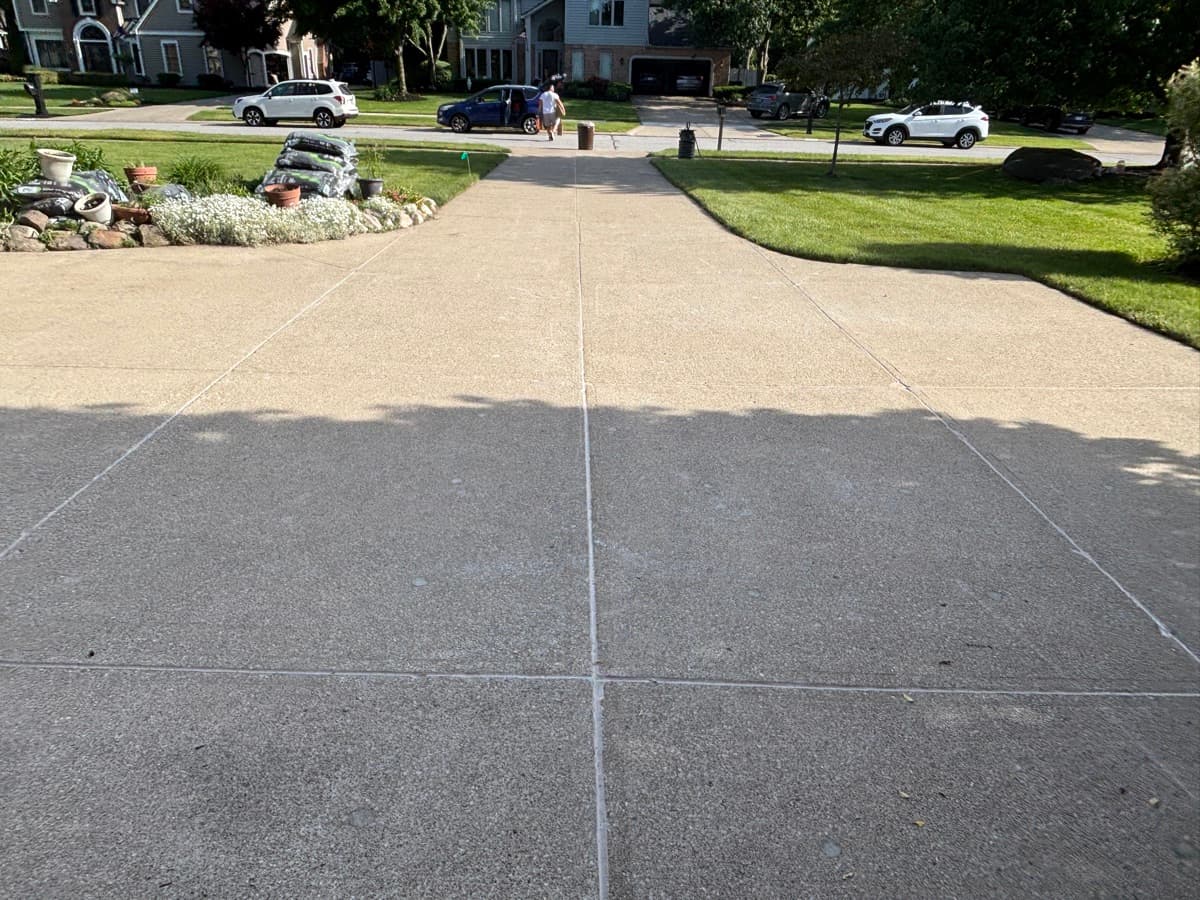
Homeowners in Cleveland often ask us the same question: “Do I need my driveway caulked or sealed?” The short answer is they're two completely different things — and depending on your driveway's condition, you might need one, the other, or both.
What Is Driveway Caulking?
Driveway caulking is the process of filling and sealing the expansion jointsin your concrete driveway. These are the lines cut into the concrete that allow slabs to expand and contract with temperature changes. Over time, the original filler in those joints breaks down, cracks, or falls out completely — leaving open gaps where water, dirt, and weeds get in.
We clean the joints out, install a foam backer rod, and apply a flexible silicone sealant that bonds to both sides of the joint and moves with your concrete. This creates a watertight seal that prevents water from getting under your slabs.
What Is Driveway Sealing?
Driveway sealing (also called concrete sealing) is applying a protective coating over the entire surfaceof your driveway. The sealer soaks into or sits on top of the concrete to protect it from moisture, stains, salt damage, and UV fading. It's like a clear coat for your driveway.
Sealing is especially important for decorative concrete like stamped or exposed aggregate driveways, where you want to preserve the color and finish. But even standard concrete benefits from sealing — it extends the life of your driveway by keeping moisture from penetrating the surface.
The Key Difference
Caulking
- • Targets the joints between slabs
- • Prevents water from getting under your concrete
- • Stops weeds, erosion, and slab shifting
- • Uses flexible silicone sealant
- • Lasts 5–10 years
Sealing
- • Covers the entire surface of the driveway
- • Protects the concrete itself from moisture and stains
- • Preserves color on stamped/decorative concrete
- • Uses a liquid sealer (acrylic, penetrating, etc.)
- • Needs reapplication every 2–5 years
Think of it this way: caulking protects what's under your driveway (the base material and sub-grade) by keeping water out of the joints. Sealing protects the concrete itself by keeping moisture, salt, and stains from penetrating the surface.
Do You Need Both?
In many cases, yes. They work together. Caulking the joints keeps water from going under your slabs, and sealing the surface keeps water from soaking into the concrete itself. For the best protection — especially in Northeast Ohio where freeze-thaw cycles do serious damage — doing both gives your driveway the longest life.
That said, if you have to pick one, caulking is almost always the higher priority. Water getting under your slabs causes the biggest problems: erosion, settling, cracking, and heaving. Surface damage from skipping a seal coat is cosmetic by comparison.
How Do You Know Which One You Need?
Here's a quick guide:
- • Weeds growing through joints, gaps between slabs, water pooling in joints → You need caulking
- • Faded color, surface staining, salt damage, pitting → You need sealing
- • Both of the above → You need both (caulk first, then seal)
- • Driveway was recently leveled → Caulking is essential to protect the investment
We Do Both
At Infinity Caulking & Restoration, we handle both driveway caulking and concrete sealing. We can look at your driveway and tell you exactly what it needs — no guesswork, no upselling. If your joints are in good shape and you just need a seal coat, that's what we'll recommend. If the joints are the problem, we'll start there.
Bottom Line
Driveway caulking and driveway sealing are both important, but they do different jobs. Caulking seals the joints to keep water from getting under your slabs. Sealing coats the surface to protect the concrete itself. For the best results in Cleveland's climate, most driveways benefit from both.
Infinity Caulking & Restoration provides professional driveway caulking and concrete sealing for homeowners throughout Greater Cleveland, Parma, Strongsville, Brunswick, Medina, and surrounding areas.
Get a Free Estimate